
It is starting to look fixed:
we will be spending a good fortnight in Italy also in October. What worries me a bit is that
so far I have only managed to scratch the surface of our April journey and soon
I’d have lots of new things to tell and show. Well, at least I will have much
to think back and keep posting about during the dark and weary winter months
ahead.


Let’s start with our visit to Riomaggiore, the southernmost of the
five coastal villages constituting the fabulous Cinque Terre in Liguria I was posting about some time ago.
We wanted to take a romantic walk on the famous Via dell’ Amore, the short pavement-like path that connects it with
Manarola and is known for its breathtaking beauty.


So we headed straight to the tourist
office through the pedestrian tunnel between the village bay and that of the
train station. The cameras were all set, the drinks were packed – but we didn’t
get any tickets as even the lovers’ path was closed because of repair work. We
couldn’t but skip the vows this time. Judging from the padlocks at the entrance to
the path, some of the other travellers hadn’t been as easily
discouraged.


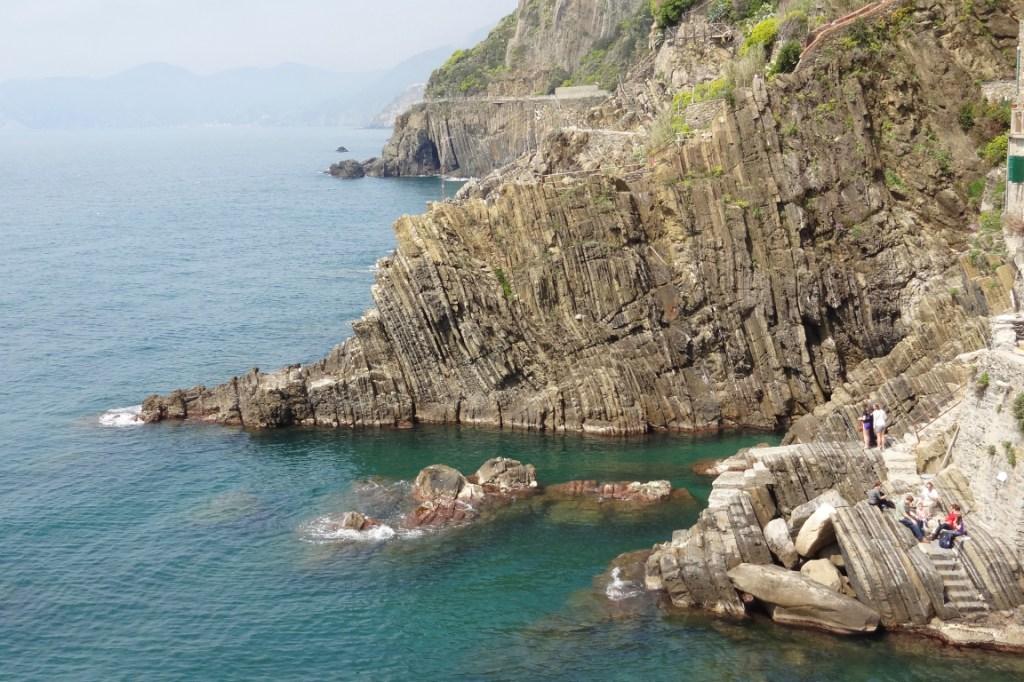
We could spot places where the path had completely fallen off also on the cliff between the two bays. Today, I checked the current situation from the Cinque Terre trails page and found that the Via dell’Amore as well as several other paths and trails are still closed because of the damage caused by the
torrential rains of October 2011. Kirsty, a fellow blogger, was lucky to walk the path before that. You will find the post on her blog ‘You had
me at bonjour’ here.


There is an impressive mural entitled
‘History of men and stone’ by Silvio
Benedetto on the wall behind the train station. It’s a pity it had been
painted on something like plywood boards so it had already started to decay.
Benedetto’s multimaterial mosaic ‘The sequence of memory’ on the wall of
the 157-metre tunnel, on the other hand, will stand the test of time, there’s
no doubt about that.


Benedetto is an Argentine-born
artist of Italian descent. He moved to Italy in the early 1960s when he was in
his twenties and has made a career as a painter, sculptor and theatre director
in his new homeland. He has been described as the last of the great muralists. We saw another mural by him at the courtyard-like square above the pedestrian tunnel with a view down to the little village bay. His paintings of local everyday life decorate a school building there.


When in Riomaggiore, you will eventually end up at the picturesque cove with the tiny boats and the hills patched
with terraced houses rising on both sides. The cove is located at the mouth of a
stream running under the main street of the village. Actually, the name of the
village derives from what used to be a river called ‘Rivus maior’.


Thanks to the colourful rows of boats
and the fishing-related items hanging by the arched stone structures, the lovely cove
still maintains something of its former character of a humble fishing port.


We
were so charmed with the multicoloured views it took a while until we noticed there
was a professional photo shoot going on by the boats.


The team was shooting
accessories – handbags and shoes – and the model had nothing but a rough
stone-and-brick bench in a corner by one of the buildings for a changing room. As far from glamorous as you can imagine.

 |
| San Giovanni Battista. |

 |
| Oratorio di Santa Maria Asunta. |
Finally, a quick pop into a couple of
churches and we were off to new adventures. We will hopefully return to the spectacular region one fine
spring or autumn day to explore some of the numerous hiking trails in the National Park for real.
This post completes my series on the Cinque Terre. The earlier ones were:
Unique man-made landscape (Corniglia)
(We never made it to Monterosso al Mare. Something new to
look forward to next time.)


 |
| Another plywood board mural by Silvio Benedetto. |


